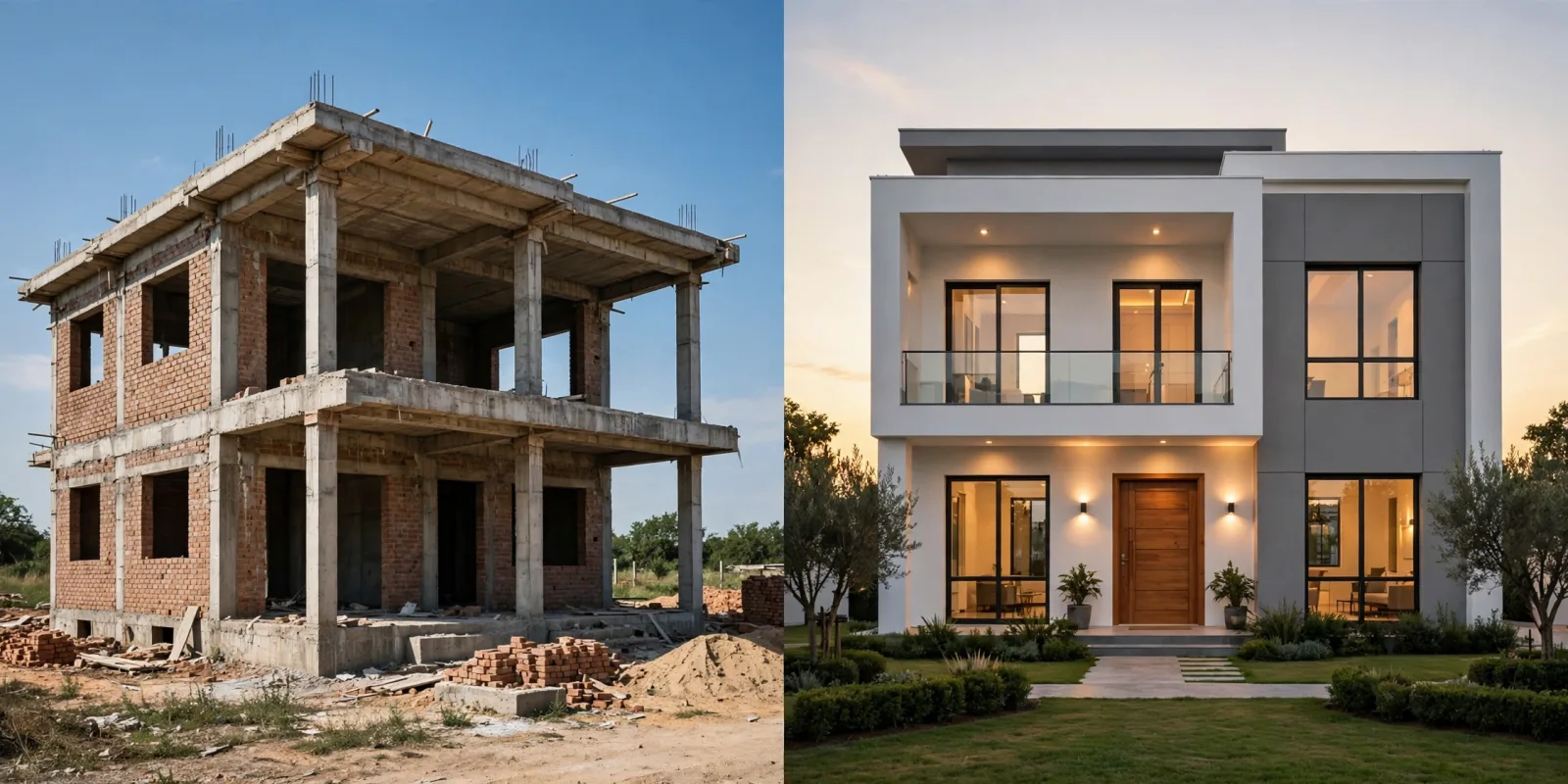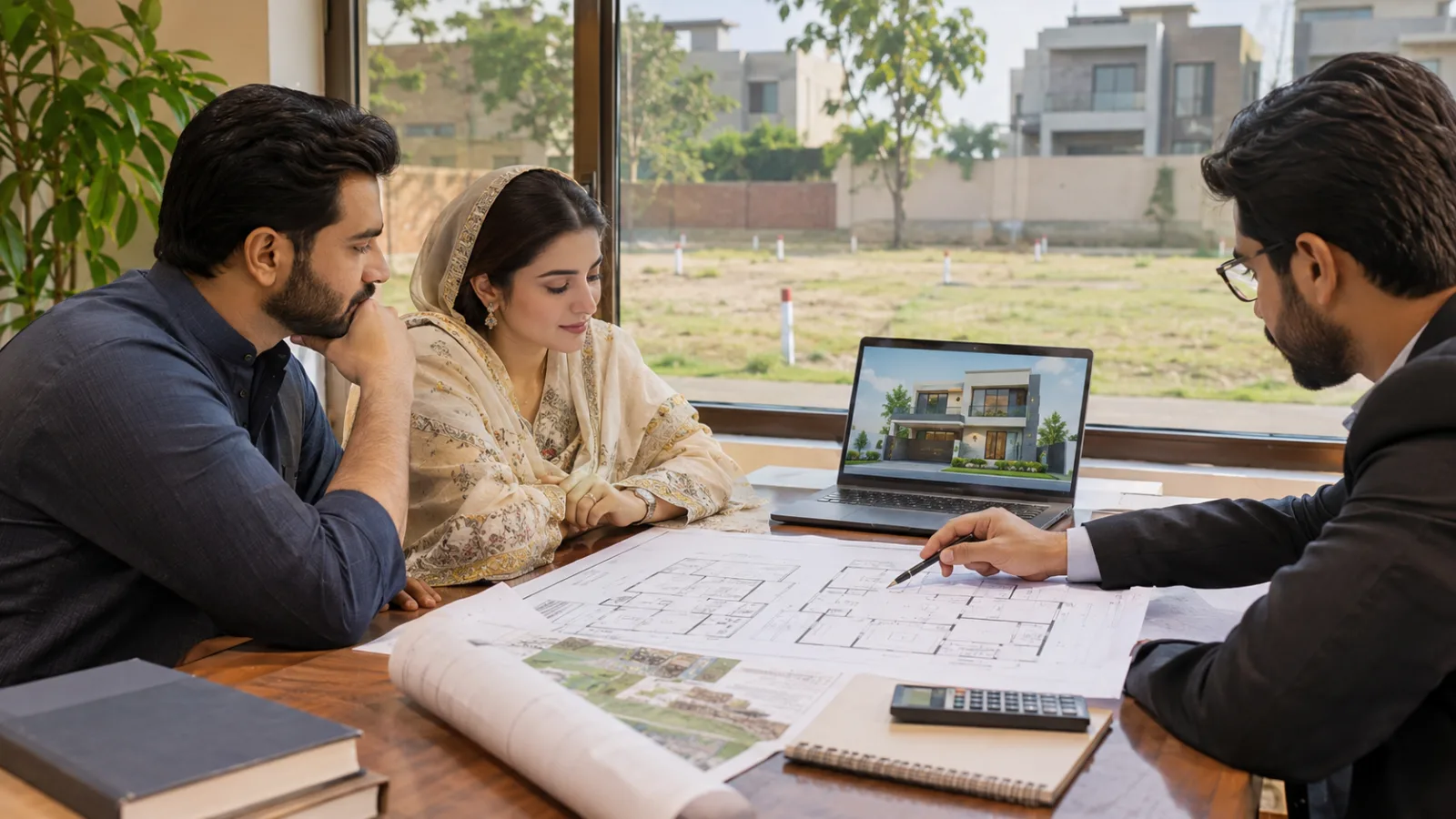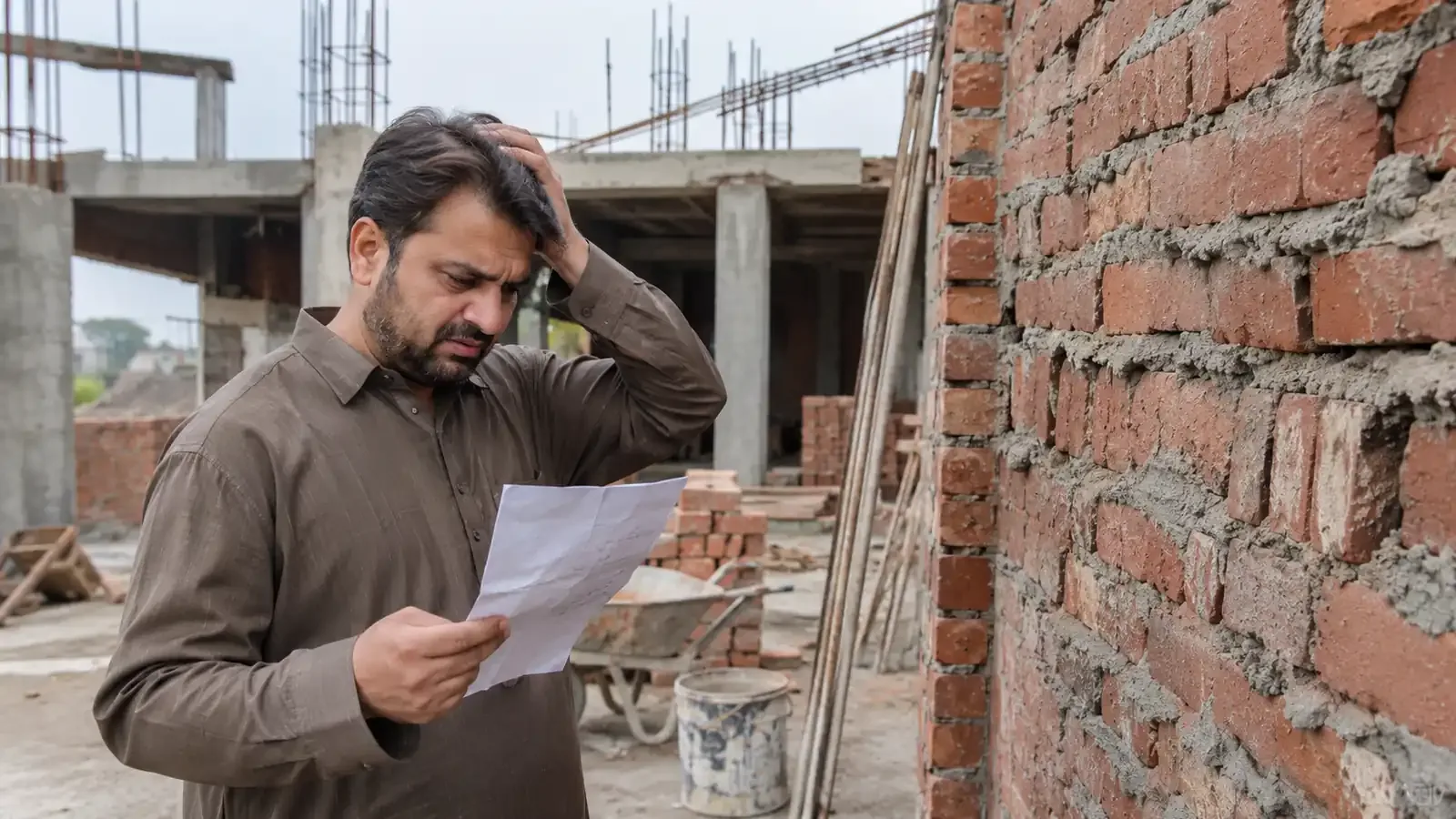
Most construction horror stories in Pakistan don't start on site. They start at a table, weeks earlier, when a contractor said something that should have worried you and you let it slide because the price was good or he seemed friendly. The warning signs are usually there. You just have to know what they look like. Here are ten red flags we'd never ignore when hiring a construction company, and what a good contractor does instead.
1. The quote is one number on a single page
"10 marla, grey structure, PKR 85 lakh." That's not a quote. That's a guess with a full stop.
A real quote tells you what's included, what isn't, which materials are being used and how the covered area was calculated. Without that, you can't compare it with anyone else's, and you can't hold the contractor to anything later. A vague quote is almost always cheaper on paper, because the missing items come back as "extras" once your house is half built.
What a good contractor does: gives you a written scope, ideally with a BOQ (bill of quantities), and explains the covered area figure. If you're not sure how to read one, our guide on grey structure cost in Lahore walks through it line by line.
2. The price is far below everyone else's
When three contractors quote around PKR 90 lakh and a fourth says PKR 72 lakh, it's tempting to believe you've found a bargain. You probably haven't.
Cement, steel and bricks cost roughly the same for everyone. A contractor can only beat the market by that much if he's cutting something: thinner steel, weaker concrete, fewer engineers, or a scope so small that half your house is "not included." Sometimes it's a deliberate low bid to win the job, with the difference recovered later through change orders.
What to do: ask the cheapest contractor to explain, item by item, why he's cheaper. A good one will have real answers. A bad one will get vague.
3. He wants a big advance before any work starts
A modest mobilisation payment is normal. Asking for 40 or 50 percent up front is not.
Once a contractor has most of your money, you've lost almost all your leverage. If he slows down, moves his labour to another site or simply disappears, you're the one chasing him. This is the single most common pattern in construction disputes we hear about.
What a good contractor does: ties payments to completed stages, such as foundation, each slab and plaster, so you only pay for work you can see.
4. He won't put brands and grades in writing
"Don't worry, sir, A-grade material lagay ga." Every contractor says that. The question is whether he'll write it down.
Ask for the cement brand, the steel brand and the steel grade (Grade 60 is the norm for structural work) in the contract. If he resists, it's usually because he wants the freedom to substitute something cheaper later. You'd be paying an A-grade rate for whatever was available that week.
5. No PEC licence, or one that doesn't match the job
The Pakistan Engineering Council licenses construction firms by category, and each category has a limit on project size. A C-6 firm, for example, is limited to projects up to PKR 25 million, while a C-4 firm can take on up to PKR 200 million. PEC's rules penalise firms that work without a valid licence or beyond their category.
Watch for three things: no licence at all, a licence in a different company name, or a category too small for your project. Any of them is a reason to stop and ask questions. Our PEC registration guide explains exactly how to check.
6. There's no engineer, just a munshi
A site supervisor who keeps the register is useful. But he's not a substitute for a qualified engineer checking the steel before every slab is poured.
Once concrete sets, mistakes are permanent. Wrong bar spacing, missing stirrups or a weak mix can't be fixed with paint. Ask who the engineer is, whether they're registered, and how often they'll actually be on your site. If the answer is "jab zaroorat ho," that's not a plan.
7. He pushes you to skip the map approval
"Approval baad mein ho jaye gi, kaam shuru karte hain." This one sounds like it saves time. It can cost you far more.
Building without an approved map, or building beyond it, can lead to fines, stop work notices and problems getting your completion certificate. A contractor who's relaxed about rules on paper will usually be relaxed about them on site too.
What a good contractor does: builds strictly to the approved drawings, and tells you upfront if something you want isn't allowed by your society's bylaws. Our house construction planning guide covers the approval steps.
8. He can't show you a single finished project
Every contractor has a portfolio on WhatsApp. Fewer can take you to a house they finished two years ago and let you talk to the owner.
Ask to see completed work, ideally something similar in size to your project. Look at the plaster lines, the corners, the bathrooms. Ask the owner whether it finished on time and how the contractor handled problems. Photos can be borrowed. Owners can't.
9. He's reluctant to sign a proper contract
"Hum zubaan ke pakke hain." Maybe he is. But memories fade, and disagreements always come down to what was "agreed."
Your contract doesn't need to be long. It needs to cover scope, materials, payment stages, timeline, what happens if material prices rise and what happens if the work runs late. A contractor who won't sign that is telling you he wants room to change the deal later.
10. Updates are vague, and you can't visit the site
Good contractors are happy for you to see the work. Bad ones get evasive: the site is "not ready to show," photos arrive days late, or you only ever see finished walls, never the steel inside them.
This matters most if you live abroad. If you're building from Riyadh, Dubai or Doha, insist on photos and short videos at every critical stage, especially the reinforcement before each slab is poured, and don't release payments until you've seen them.
Bonus: the red flags in your own plans
Not every risk comes from the contractor. Sometimes it's the plan itself.
A budget that only works at the cheapest rate you've seen online. Drawings that are still "being finalised" when digging starts. A plot whose papers haven't been checked properly. If you're still choosing a plot, our sister company Saiban Associates helps buyers verify plots and files before they commit, which saves a lot of trouble later.
What a good construction company looks like
Flip every red flag around and you get a simple checklist. A detailed written quote. A price you can understand. Stage-wise payments. Brands in writing. A valid PEC licence in the right category. A real engineer. Respect for approvals. Finished projects you can visit. A proper contract. Honest updates.
That's the standard we hold ourselves to at Saiban Builders, and it's the standard you should hold every contractor to, including us. If you'd like to talk through your project, you can request a quote or get in touch. Ask us every question on this list.
Frequently Asked Questions
What are the biggest red flags when hiring a contractor?
The most serious are a large advance before work starts, a vague one-line quote, a price far below the market, no written contract and no valid PEC licence. Any one of these is a reason to slow down and ask more questions.
How much advance is normal for a construction contractor in Pakistan?
A small mobilisation payment to start work is common, but large advances of 40 to 50 percent are risky. It's safer to tie payments to completed stages like the foundation, each slab and plaster, so you only pay for work you can see.
How do I check if a construction company is genuine?
Ask for their PEC licence and check the firm name, category and expiry date, then verify it through the Pakistan Engineering Council. Visit at least one finished project and speak to the owner, and make sure the name on the licence matches your contract.
Is the cheapest construction quote a bad idea?
Not always, but a quote far below others usually means something is missing, whether it's scope, material quality or supervision. Ask the contractor to explain the difference item by item before you decide.
What should a construction contract include?
At minimum: the full scope of work, material brands and grades, the covered area, a stage-wise payment schedule, a timeline, what happens if material prices rise, and what happens if the project is delayed.
How can overseas Pakistanis avoid contractor problems?
Use stage-wise payments, ask for photos and videos of the steel before every slab, get an independent check at critical stages, and never release money without proof. A valid PEC licence and a written contract are two things you can fully verify from abroad.