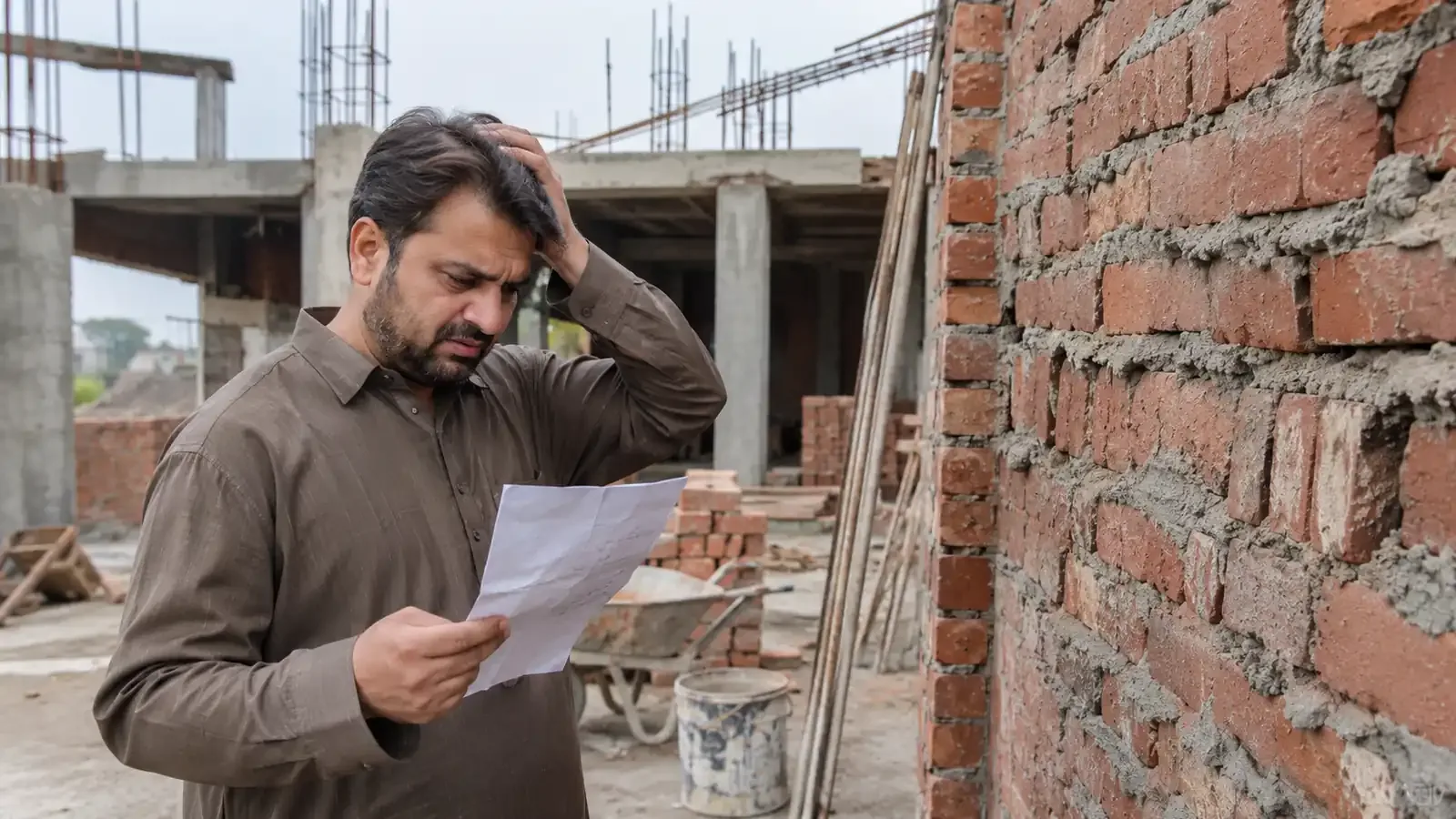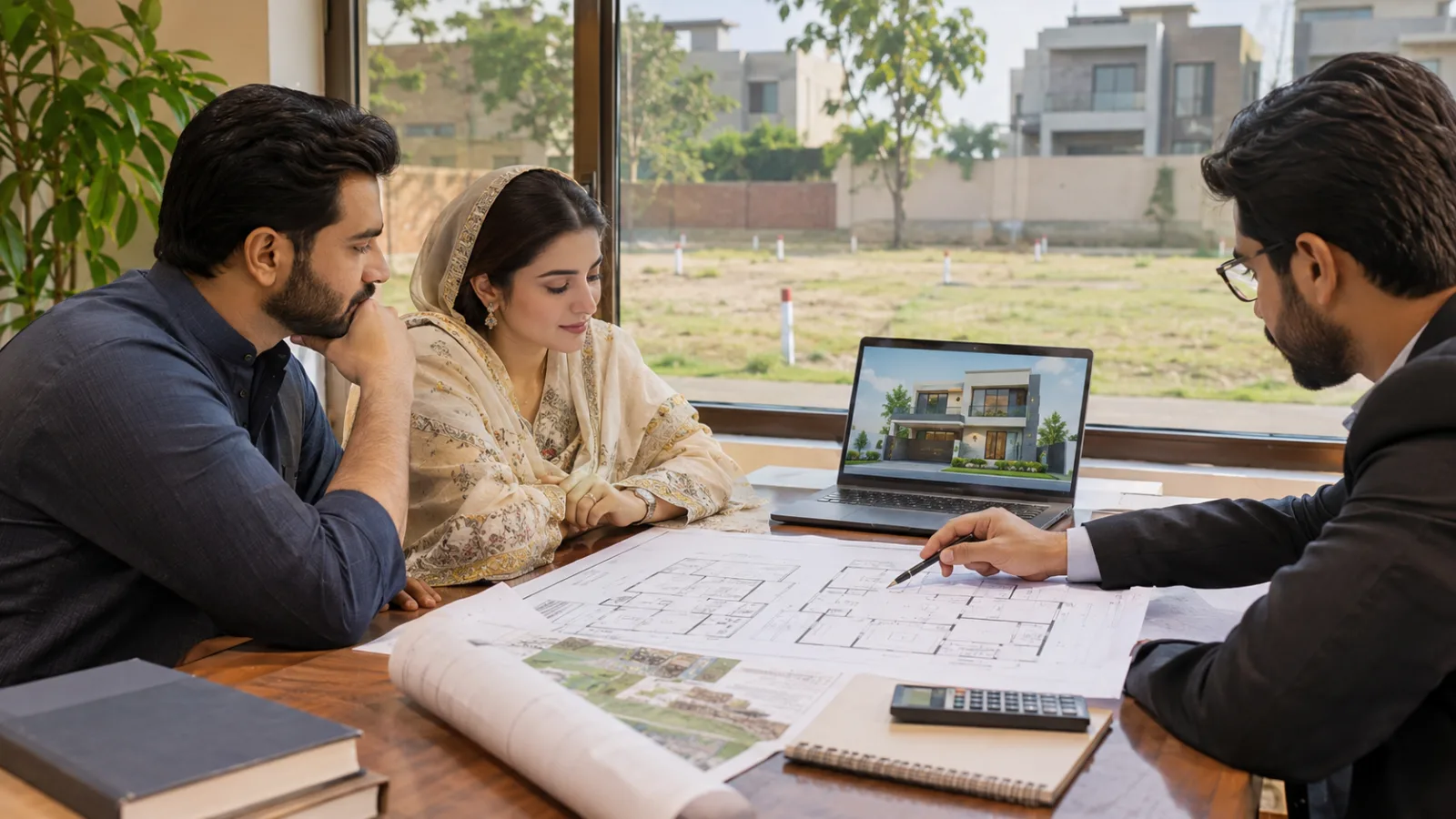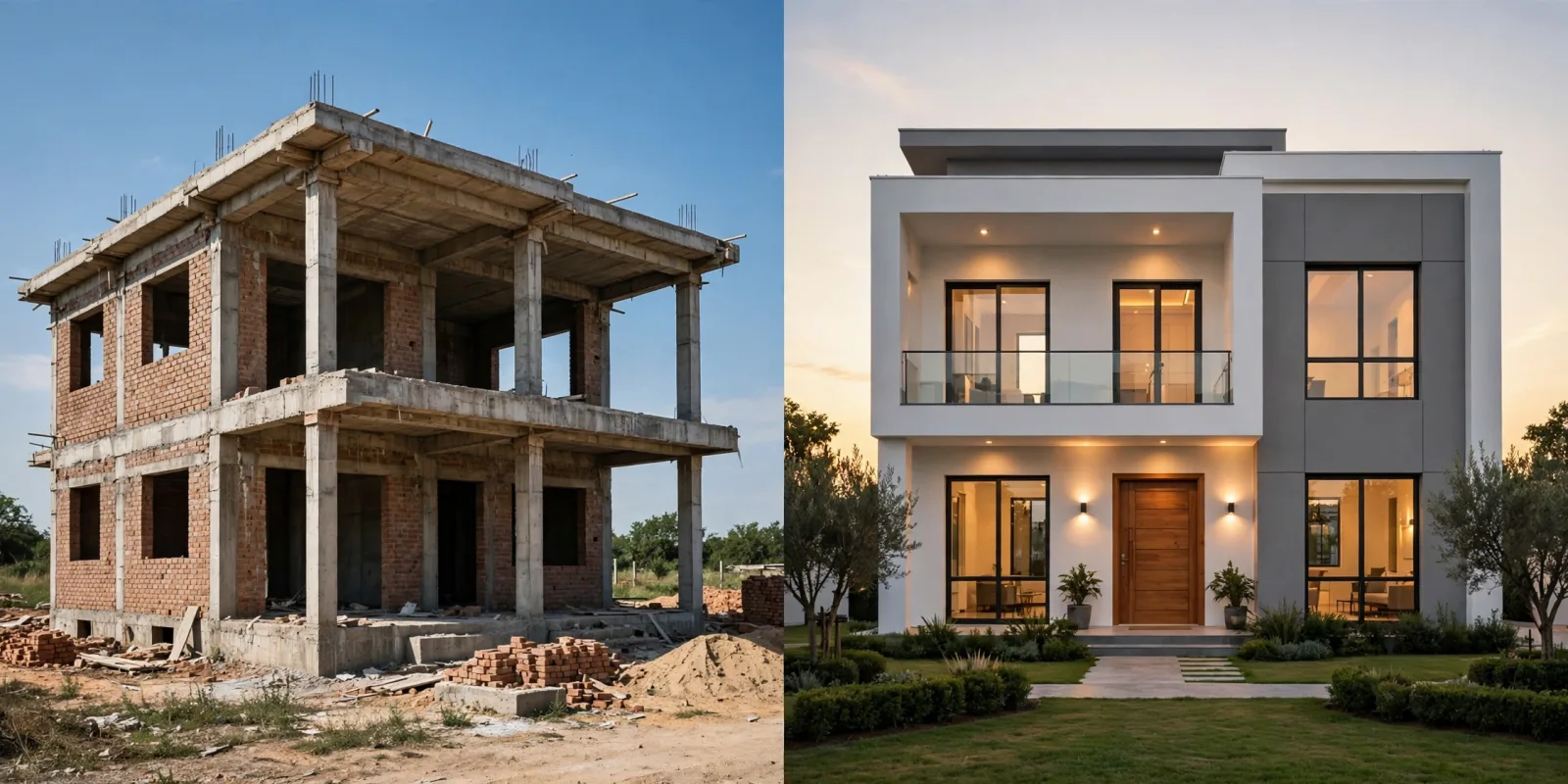
"Grey structure ya turnkey?" It's usually the first real decision after you've got a plot and a design, and the two quotes can look wildly different. One contractor offers around PKR 90 lakh for a 10 marla house. Another says PKR 1.4 crore. Is one of them overcharging? Probably not. They're most likely quoting for different things. This guide explains what grey structure and turnkey construction actually include, where the line between them gets blurry, what each costs in Lahore right now, and how to choose the one that fits you.
What "grey structure" means
Grey structure is the skeleton and shell of the house. It's everything that holds the building up and keeps the weather out, before anything you'd call a finish goes on.
A typical grey structure package in Lahore covers:
- Excavation, foundation and the damp proof course (DPC)
- RCC columns, beams, slabs and the roof
- Brick masonry for all walls
- Concealed conduits for electrical wiring and pipes for plumbing inside walls and slabs
- Labour, shuttering and curing for all of the above
When grey structure is done, you have a house you can walk through, with rooms, stairs and a roof. But no tiles, no doors, no wiring, no paint. Nobody can live in it yet.
What "turnkey" means
Turnkey means the contractor builds the complete house and hands you the key. In practice, it's grey structure plus all the finishing:
- Plaster, putty and paint, inside and out
- Flooring: tiles, marble or wood
- Doors, windows and their frames
- Electrical wiring, switches, sockets and light points
- Plumbing fittings, bathroom fixtures and the kitchen
- False ceilings, if specified
- Elevation and exterior finishing
With a turnkey contract, one company is responsible for the whole job. You approve the materials and they manage the dozens of trades involved: tile fixers, electricians, plumbers, carpenters, painters and the rest.
The blurry middle: items that move between the two
Here's what catches people out. There's no official definition of grey structure in Pakistan, so contractors draw the line in different places.
Plaster is the best example. Some Lahore contractors include it in grey structure. Others treat it as the first stage of finishing. The same goes for door and window frames (chowkhats), the water tanks, the boundary wall and even electrical wiring, since some grey structure quotes include only the conduits and leave the wires for later.
A few other items often sit outside both packages unless you ask: the main gate, the basement, solar preparation, landscaping, and approval and connection fees.
So when two grey structure quotes differ by PKR 10 lakh, the first thing to check isn't the rate. It's the list of what's included. We covered this in detail in our guide to grey structure cost in Lahore.
Grey structure vs turnkey cost in Lahore (2026)
Rates move with cement, steel and the finishing you choose, so treat these as planning ranges based on 2026 rate guides published by Lahore builders:
- Grey structure: roughly PKR 2,600 to 3,400 per square foot of covered area
- Economy turnkey: roughly PKR 4,800 to 5,800 per square foot
- Mid-range or standard A-grade turnkey: roughly PKR 6,000 to 8,800 per square foot
- Premium turnkey: PKR 8,500 to 12,000 per square foot, and more for luxury specifications
Notice how wide the turnkey range is. That's because finishing is where your choices pile up. Local tiles or imported marble? Standard sanitary fittings or a premium brand? Painted walls or textured feature walls? The structure costs roughly the same whatever you pick. The finishing doesn't.
What that looks like for a 10 marla house
Take a typical 10 marla double storey house with around 3,200 square feet of covered area. One Lahore builder's 2026 rate guide puts it at:
- Grey structure: about PKR 82 to 92 lakh
- Economy turnkey: about PKR 1.05 to 1.2 crore
- Mid-range turnkey: about PKR 1.3 to 1.5 crore
- Premium turnkey: about PKR 1.6 to 1.85 crore
In other words, finishing can cost almost as much as the structure, or more. If you budget only for the grey structure figure you saw online, you've budgeted for roughly half a house.
The third option: labour-only contracts
There's a third model that's still common in Lahore: the labour-only contract. You hire a thekedar for labour at a per square foot rate and buy every bag of cement, bundle of steel and truck of bricks yourself.
Labour typically makes up a few hundred rupees per square foot of the grey structure cost. One Lahore builder's 2026 breakdown puts labour on a 10 marla grey structure at around PKR 350 to 450 per square foot.
The appeal is obvious. You control material quality and you don't pay a contractor's margin on materials. The catch is just as real. You or someone you trust has to be on site constantly, ordering materials, checking deliveries and stopping waste. Every delay in material supply is your problem, not the thekedar's. And when something goes wrong, the line between "bad material" and "bad workmanship" becomes an argument.
Our honest view? Labour-only works well for people who live nearby, have time, and have built before. For a first-time builder or anyone overseas, it's usually the most stressful way to save money.
Which should you choose?
There's no single right answer, but there's usually a right answer for you.
Choose grey structure only if you want a reliable company for the part that's hardest to fix later, the structure, and you're happy to manage finishing yourself or hire separate finishing contractors. It's also a sensible route if your budget is coming in stages and you'd like to pause safely after the roof is done.
Choose turnkey if you'd rather have one contract, one point of responsibility and one timeline. It costs more up front, but it saves you from coordinating a dozen trades. And it removes the classic finishing dispute where the tile fixer blames the plasterer and the plasterer blames the plumber.
If you live overseas, turnkey with a detailed specification sheet is usually the safer choice. Managing finishing trades from Riyadh or Dubai is hard, and finishing is where most quality problems and budget overruns happen.
Some owners split it: a structural contract with one firm, then a separate finishing contract once the grey structure is complete and they've seen the quality of the work. That's a reasonable middle path, as long as both contracts are clear about where one ends and the other begins.
The specification sheet is the real contract
"Turnkey" on its own is almost meaningless. Two turnkey quotes can describe completely different houses. What protects you is a written spec sheet listing brands and grades for tiles, sanitary fittings, wires and switches, paint, doors and windows. Where you haven't chosen a product yet, the contract should state an allowance, for example a fixed amount per square foot for floor tiles. That way an upgrade is your decision, not a surprise bill.
Five questions to ask before you sign a turnkey contract
1. Is there a full spec sheet with brands? If it just says "A-grade finishing," ask for specifics in writing.
2. What are the allowances, and what happens if I go over them? You should know the rate you'll pay for upgrades before you start choosing tiles.
3. Is plaster, wiring and the boundary wall included? Check every item from the "blurry middle" list above.
4. How long will finishing take? Finishing often takes as long as the structure, or longer. One Lahore builder estimates 7 to 9 months for a 5 marla economy turnkey house. Ask for a stage-wise schedule.
5. What happens at handover? Agree on a snag list inspection and a period during which the contractor fixes defects like leaks, cracks or faulty fittings at no cost.
And don't forget the basics from our PEC registration guide: check that the contractor's licence category covers the full turnkey value of your project, not just the structure.
Still deciding whether to build at all?
Sometimes the grey structure vs turnkey question leads to a bigger one: should you build, or buy a house that's already built? If you're weighing that up, our sister company Saiban Associates can show you ready houses and plots in DHA Lahore and other societies, so you can compare the real numbers side by side.
If you've decided to build, our house construction planning guide covers the steps to sort out before you break ground. And when you're ready to talk about your project, you can request a quote from Saiban Builders or get in touch. Bring both questions, grey structure and turnkey, and we'll walk you through what each would look like for your plot.
Frequently Asked Questions
What is the difference between grey structure and turnkey construction?
Grey structure covers the foundation, frame, walls, roof and the conduits and pipes inside them. Turnkey covers all of that plus the finishing, such as plaster, paint, flooring, doors, windows, wiring, fittings, bathrooms and the kitchen, so the house is ready to move into.
Is plaster included in grey structure?
It depends on the contractor. There's no fixed definition in Pakistan, so some include plaster in grey structure and others count it as finishing. Always check the written scope before comparing quotes.
How much does turnkey construction cost per square foot in Lahore?
Based on 2026 rate guides from Lahore builders, economy turnkey runs roughly PKR 4,800 to 5,800 per square foot, standard to mid-range around PKR 6,000 to 8,800, and premium from about PKR 8,500 to 12,000 or more. Your finishing choices make the biggest difference.
Is turnkey construction worth it?
For many people, yes. It costs more than managing finishing yourself, but you get one contract, one timeline and one company responsible for quality. It's especially worth it if you live overseas or don't have time to manage several trades on site.
What is a labour-only construction contract?
It's a contract where you pay a contractor only for labour and buy all the materials yourself. It can save money on material margins, but it needs constant supervision and makes quality disputes harder to resolve.
Can I start with grey structure and decide on finishing later?
Yes, and many people do. Just make sure the grey structure contract clearly lists what's included, so the finishing contractor knows exactly where to pick up. Finishing the roof and walls completely before any pause also protects the structure from weather damage.